Wind Turbine Blade Recycling Facilities
Compton Industriale’s ReWind Line
End-of-life wind turbine blades are not just a disposal problem: they take up space, tie up resources, and can become an increasing cost over time.
With ReWind, you can turn them into a new source of value. The plant significantly reduces the volume of the blades and recovers fiberglass that can be resold on the market.
The result? Lower operating costs, more available space, and new revenue to reinvest in the development of your energy assets.
ReWind is the result of years of testing, modifications, and optimizations. This maturity is evident in the plant’s very operation: in the orderly flow of materials as they move through the process, in the continuity of a system designed to last, and in the robustness of a structure built to handle tons of material every day.
Thanks to the numerous tests conducted during its development, ReWind is not simply a new offering for the market, but the result of a refinement process aimed at maximizing the quality of the recovered materials. The plant is designed to effectively separate fiberglass from the composite fraction, yielding a recovered material that retains significant economic value.
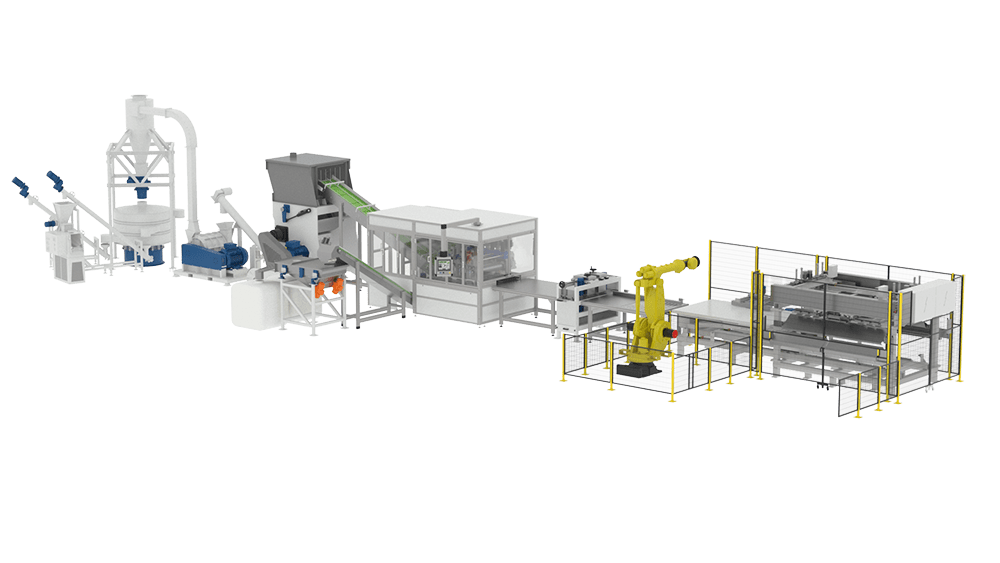
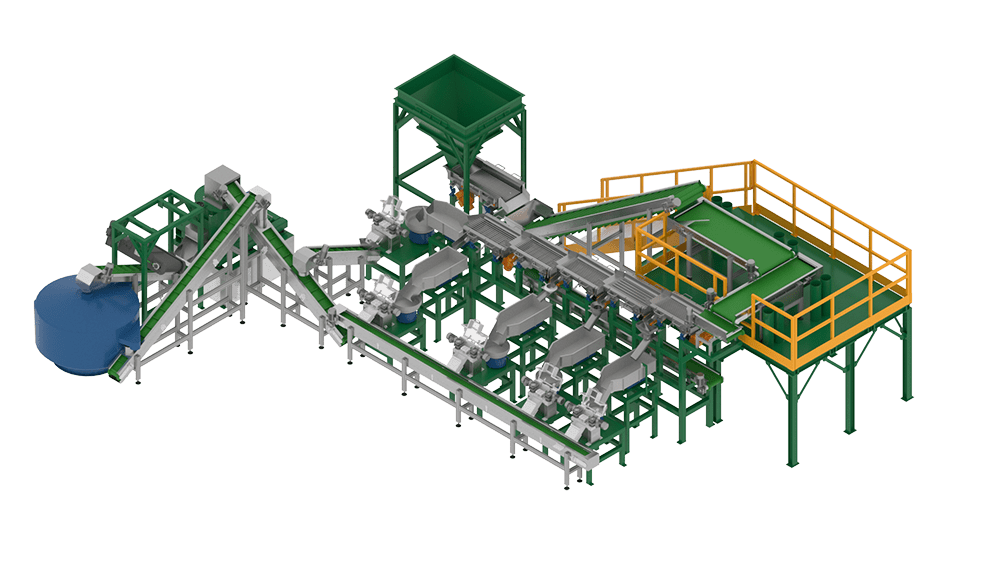
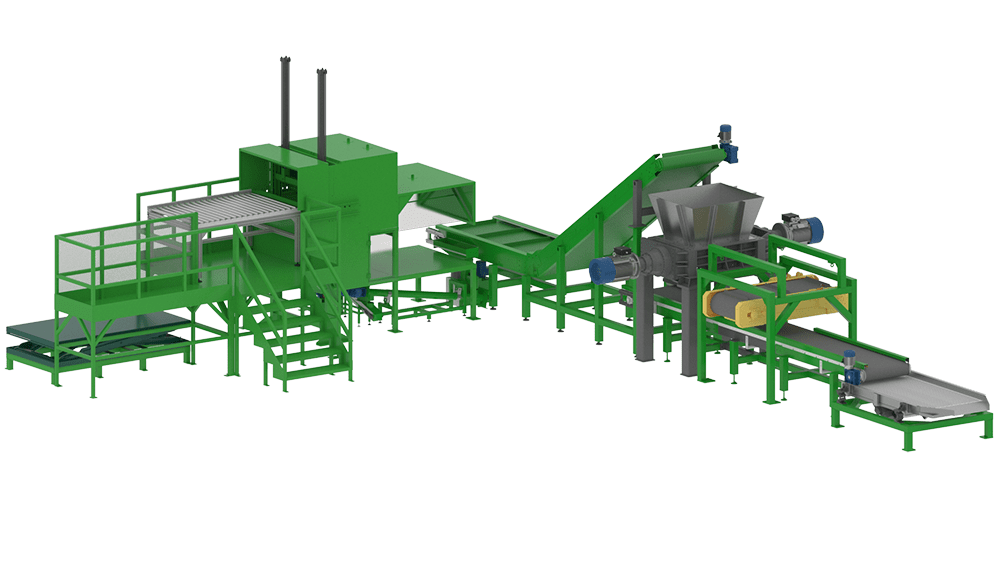
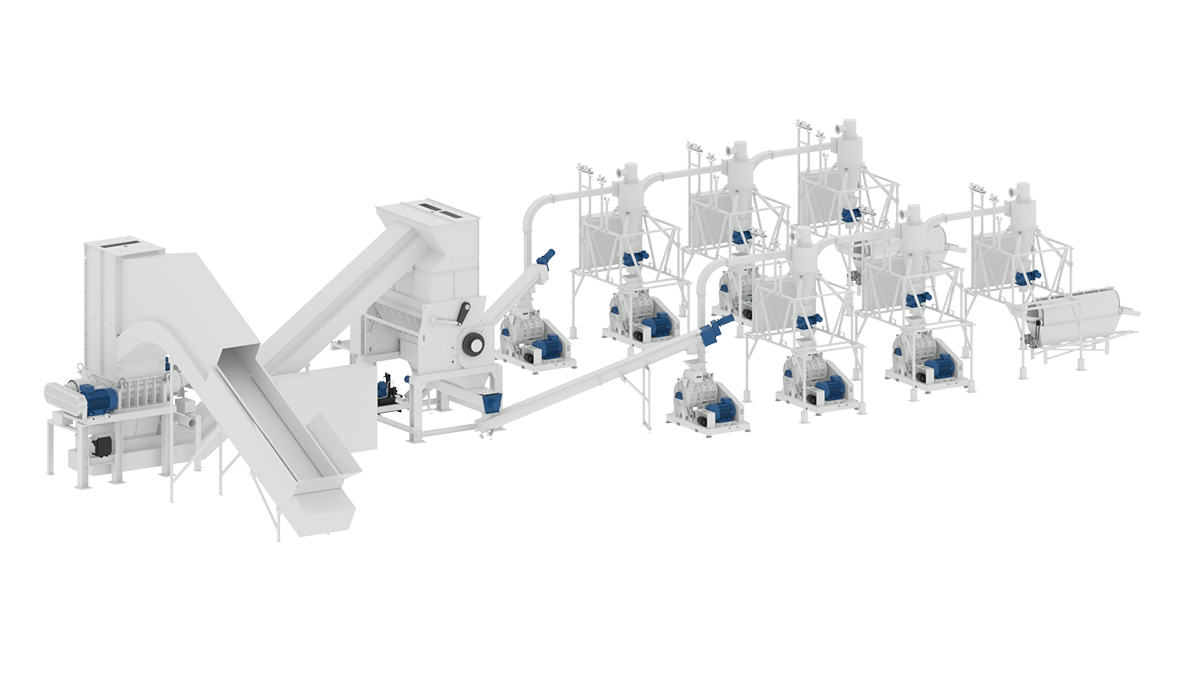
The process consists of two main stages: a two-stage shredding section, which progressively reduces the size of the material, and a separation section comprising turbines and screens, which allows the various output fractions to be distinguished and sorted.
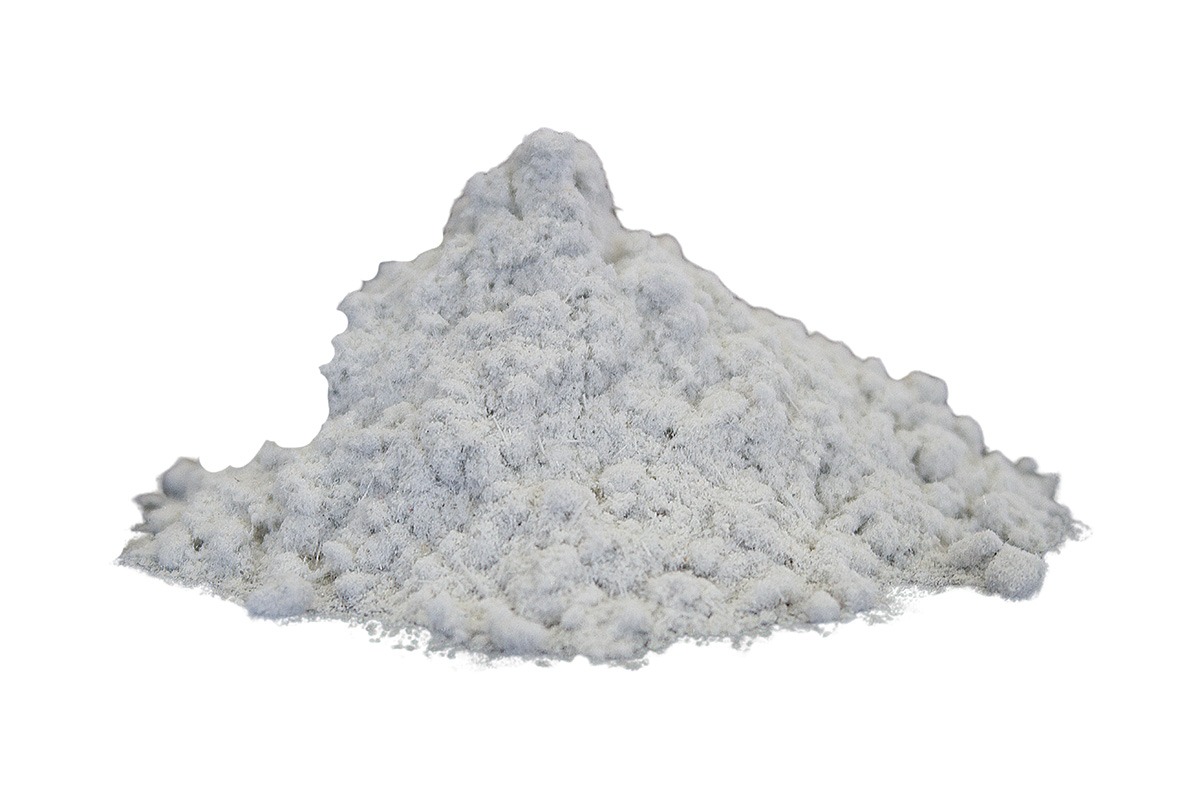
The recovered material consists of up to 68% fiberglass, a secondary raw material that can be used for various industrial applications, including those in the construction sector.
- MACHINE TYPE: ReWind
- PRODUCTION CAPACITY: 5,000 kg/hour*
- INSTALLED POWER: 1,087 kW
- WIDTH: 18,000 mm
- LENGTH: 34,000 mm
- HEIGHT: 6,600 mm
- WEIGHT: 107,000 KG
- NOISE LEVEL: 85 dB**
- VOLTAGE: 400 VOLTS THREE-PHASE
*Hourly productivity calculated based on the plant in its final configuration
** Approximate value to be determined based on the work environment where the machine is installed
What makes the ReWind system unique?
Fully mechanical process
ReWind uses an entirely mechanical treatment process that does not require the use of chemicals or heat treatments. This reduces the operational complexity of the plant, minimizes the process’s environmental impact, and simplifies the permitting requirements associated with plant management.
Components Designed to Last
Fiberglass is a particularly abrasive material that can accelerate equipment wear. For this reason, during the development of ReWind, Compton Industriale studied and optimized every stage of the separation process to minimize component deterioration. The result is an average turbine lifespan of approximately 5 months, which is longer than what is typically seen in similar applications.
Materials with Market Value
ReWind’s goal is not only to reduce the volume of end-of-life wind turbine blades but also to recover materials for new industrial applications. The recovered fiberglass and composite fraction can be used in the construction industry for the production of cementitious materials, building products, and insulation solutions, contributing to the creation of a circular supply chain with high added value.
Two configurations for different needs
To accommodate different operational volumes, ReWind is available in two configurations:
ReWind 5,000
- Processing capacity of up to 5,000 metric tons per year.
ReWind 10,000
- Processing capacity of up to 10,000 metric tons per year.
How does the recycling process work?
The ReWind process consists of two main stages.
- Shredding
The wind turbine blades, which have been pre-cut into pieces measuring approximately 2 meters × 60 centimeters, are fed into a two-stage shredding line. A first machine significantly reduces the size of the material, while a second shredder completes the process, resulting in a particle size of approximately 15 millimeters.
- Separation
The shredded material passes through a series of turbines and circular screens that separate the fiberglass from the composite fraction. The combined action of friction, agitation, and screening yields distinct material streams, which are collected separately for subsequent recovery operations.
What are the environmental benefits?
Reduced bulk and reliance on landfills
Wind turbine blades are designed to withstand extreme conditions and maintain high performance for decades. This very durability makes them particularly difficult to manage at the end of their life cycle. Through volume reduction and material recovery, ReWind helps reduce reliance on landfills and free up space previously occupied by components that are no longer usable.
New resources for industry
Recovered fiberglass retains properties such as lightness, strength, and flexibility that make it attractive for numerous industrial applications, particularly in the construction sector. Its reuse helps reduce the demand for virgin raw materials and the associated extraction activities, promoting more efficient resource management.
The Circular Economy Applied to Renewable Energy
ReWind gives materials from wind turbines that have reached the end of their operational life a second life. This approach transforms a disposal problem into a new source of raw materials for industry, strengthening the sustainability of the entire energy supply chain.
ReWind is the result of years of testing, modifications, and optimizations. This maturity is evident in the plant’s very operation: in the orderly flow of materials as they move through the process, in the continuity of a system designed to last, and in the robustness of a structure built to handle tons of material every day.
Thanks to the numerous tests conducted during its development, ReWind is not simply a new offering for the market, but the result of a refinement process aimed at maximizing the quality of the recovered materials. The plant is designed to effectively separate fiberglass from the composite fraction, yielding a recovered material that retains significant economic value.
The process consists of two main stages: a two-stage shredding section, which progressively reduces the size of the material, and a separation section comprising turbines and screens, which allows the various output fractions to be distinguished and sorted.
The recovered material consists of up to 68% fiberglass, a secondary raw material that can be used for various industrial applications, including those in the construction sector.
- MACHINE TYPE: ReWind
- PRODUCTION CAPACITY: 5,000 kg/hour*
- INSTALLED POWER: 1,087 kW
- WIDTH: 18,000 mm
- LENGTH: 34,000 mm
- HEIGHT: 6,600 mm
- WEIGHT: 107,000 KG
- NOISE LEVEL: 85 dB**
- VOLTAGE: 400 VOLTS THREE-PHASE
*Hourly productivity calculated based on the plant in its final configuration
** Approximate value to be determined based on the work environment where the machine is installed
What makes the ReWind system unique?
Fully mechanical process
ReWind uses an entirely mechanical treatment process that does not require the use of chemicals or heat treatments. This reduces the operational complexity of the plant, minimizes the process’s environmental impact, and simplifies the permitting requirements associated with plant management.
Components Designed to Last
Fiberglass is a particularly abrasive material that can accelerate equipment wear. For this reason, during the development of ReWind, Compton Industriale studied and optimized every stage of the separation process to minimize component deterioration. The result is an average turbine lifespan of approximately 5 months, which is longer than what is typically seen in similar applications.
Materials with Market Value
ReWind’s goal is not only to reduce the volume of end-of-life wind turbine blades but also to recover materials for new industrial applications. The recovered fiberglass and composite fraction can be used in the construction industry for the production of cementitious materials, building products, and insulation solutions, contributing to the creation of a circular supply chain with high added value.
Two configurations for different needs
To accommodate different operational volumes, ReWind is available in two configurations:
ReWind 5,000
- Processing capacity of up to 5,000 metric tons per year.
ReWind 10,000
- Processing capacity of up to 10,000 metric tons per year.
How does the recycling process work?
The ReWind process consists of two main stages.
- Shredding
The wind turbine blades, which have been pre-cut into pieces measuring approximately 2 meters × 60 centimeters, are fed into a two-stage shredding line. A first machine significantly reduces the size of the material, while a second shredder completes the process, resulting in a particle size of approximately 15 millimeters.
- Separation
The shredded material passes through a series of turbines and circular screens that separate the fiberglass from the composite fraction. The combined action of friction, agitation, and screening yields distinct material streams, which are collected separately for subsequent recovery operations.
What are the environmental benefits?
Reduced bulk and reliance on landfills
Wind turbine blades are designed to withstand extreme conditions and maintain high performance for decades. This very durability makes them particularly difficult to manage at the end of their life cycle. Through volume reduction and material recovery, ReWind helps reduce reliance on landfills and free up space previously occupied by components that are no longer usable.
New resources for industry
Recovered fiberglass retains properties such as lightness, strength, and flexibility that make it attractive for numerous industrial applications, particularly in the construction sector. Its reuse helps reduce the demand for virgin raw materials and the associated extraction activities, promoting more efficient resource management.
The Circular Economy Applied to Renewable Energy
ReWind gives materials from wind turbines that have reached the end of their operational life a second life. This approach transforms a disposal problem into a new source of raw materials for industry, strengthening the sustainability of the entire energy supply chain.
Request information about our recycling lines
Do you have questions about our waste recycling equipment? Would you like a personalized consultation to find the best solution for your needs? Please feel free to contact us for more information. Our experienced team is ready to help you find the perfect solution.