Wind energy is set to grow significantly in Europe, reaching around 1,300 GW by 2050. This will lead to a significant increase in both the demand for materials and the generation of waste. A major issue is posed by wind turbine blades and the composite materials from which they are made. These are glass-carbon composites (fibres + polymer matrix) which, whilst offering high performance (lightness, strength, durability), are rather difficult to separate and recycle. Recycling technologies are, in fact, still immature or costly. For this reason, only a small proportion is recycled, whilst the rest is disposed of or used for energy recovery.
Density and recyclability of composite materials in blades
In wind turbines, the use of glass-fibre or carbon-fibre-based composites is estimated at around 7,500 ± 1,500 kg per MW installed. Although they are very widespread, at the end of their life most blades are still disposed of or sent for energy recovery: recycling accounts for only a marginal proportion.
Why is this recyclability limited? Mainly due to the structural complexity of the blades, which consist of a combination of glass-carbon composites, polymers and metal components. The effective separation of these materials is technically complex and poses a significant challenge during decommissioning. Furthermore, even when separation is possible, the strong adhesion between the fibres and the polymer matrix makes recycling processes particularly difficult from both a technological and economic perspective.
In response to these challenges, the wind energy sector has committed to eliminating the landfill disposal of decommissioned blades across Europe by 2025. This objective forms part of a broader strategy aimed at increasing recycling and recovery rates, highlighting the need to develop innovative solutions and to strengthen investment in technologies dedicated to the treatment of end-of-life composite materials.
End-of-life wind turbine blades: rising figures and new solutions
The issue of composite waste from wind turbine blades is becoming increasingly significant. As early as 2023, the volume was estimated at around 60,000 tonnes, but projections indicate a rise to 400,000 tonnes by 2040. These figures highlight the urgent need to find effective and sustainable solutions.
To tackle this challenge, the wind energy industry has set an ambitious target: to ban the landfill disposal of blades across Europe by 2025, and companies and manufacturers are experimenting with new approaches to improve recycling and promote material circularity. To date, however, recycling capacity in the European Union remains limited, partly because a significant proportion of waste is still sent to cement plants, where it is used for energy recovery. Although this solution avoids landfill, it does not yet represent a fully circular model.
To take a step forward, the main strategies are moving on two fronts:
1) rethinking the design of blades, making them easier to dismantle and recycle at the end of their life
2) developing innovative technologies, such as solvolysis or high-voltage fragmentation, capable of recovering composite materials more efficiently
The future of wind turbine blades: a growing challenge for recycling
The central issue therefore remains recycling. In addition to technological innovation, public policy will also play a crucial role: clearer rules and appropriate tools are needed, such as the introduction of specific codes to identify wind turbine blade waste or the creation of a European register to track decommissioning activities. These initiatives would not only enable better management of end-of-life materials but also allow progress towards a more circular economy model to be monitored.
Ultimately, the energy transition cannot be separated from the sustainable management of its own ‘waste’. Investing in the recycling of wind turbine blades means reducing waste, recovering valuable resources and making clean energy even more sustainable in the long term.
Back to the fibre. A new beginning for every blade
Compton’s new solution is a wind turbine blade processing plant that recovers fibreglass through a mechanical process: ReWind.
The line begins with a size-reduction phase comprising two stages of shredding.
- In the first stage, the blades, previously cut into sections approximately 2 metres long and 60 cm wide, are processed by a primary shredder, which significantly reduces their volume.
- In the second stage, a secondary shredder reduces the material to an average particle size of approximately 15 mm, making it suitable for the subsequent stages of the process.
An integrated sequence of screens and turbines, organised in multiple stages, enables the separation and classification of the material. Through a combined screening and separation process, the flow is progressively refined, ensuring an efficient separation of the various fractions. At the end of the process, the material is recovered and divided into homogeneous fractions, ready to be reintroduced into new applications.
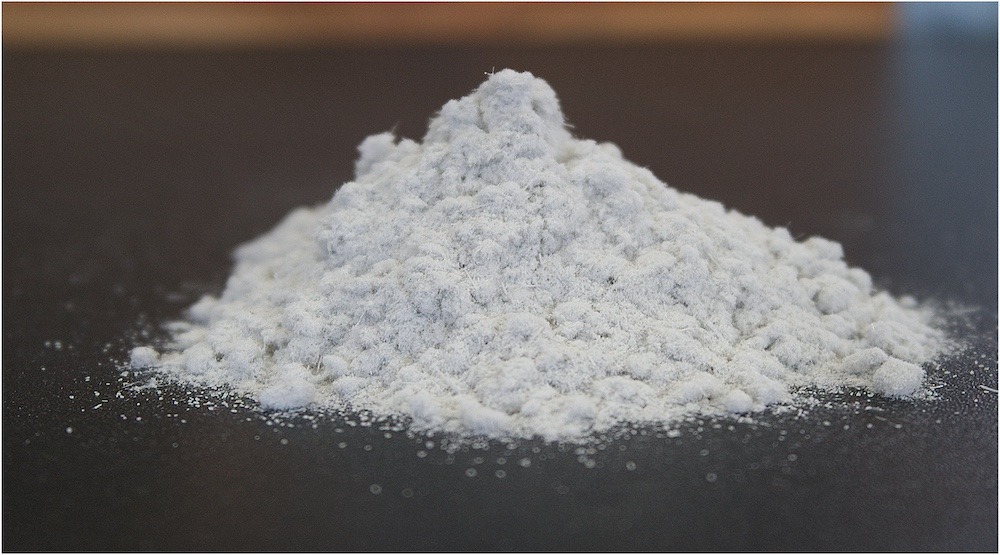
The resulting glass fibre possesses characteristics suitable for use in various industrial sectors, particularly in the construction materials sector. A stable, manageable and value-oriented output